Nomad E2 · firmware for a new platform
I contribute to the firmware and HMI of Nomad E2, turning a new hardware platform into a coherent, configurable, and enjoyable product.
Building a new experience
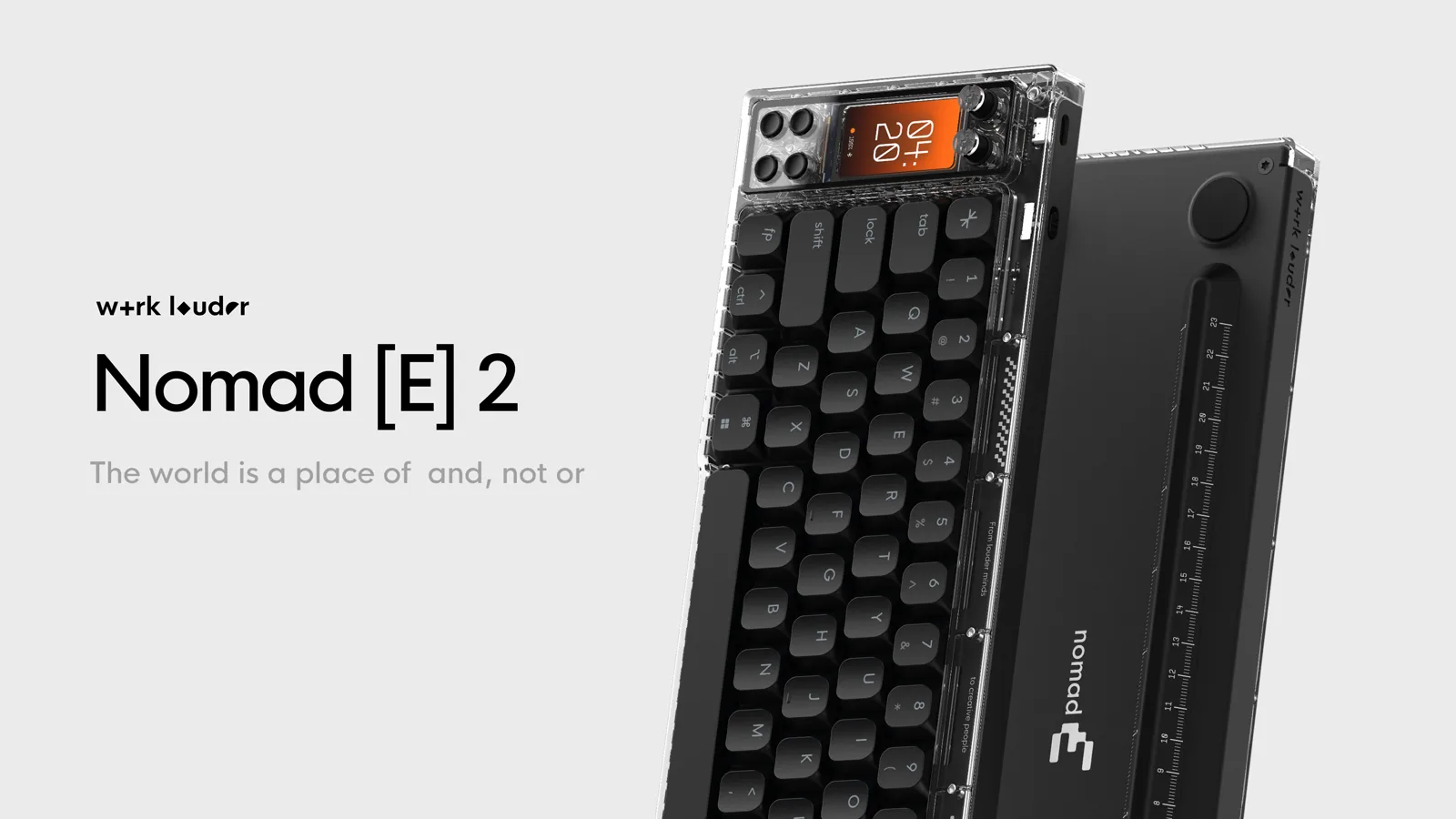
Nomad E2 is the new generation of Work Louder's programmable Nomad keyboard. It combines a full keyboard, additional controls, lighting, and a color display within a redesigned platform.
Developing a new generation creates an opportunity to reconsider how hardware, firmware, and interface work together. The challenge is turning many possibilities into a product that remains clear and predictable.

Nomad E2, a new programmable platform developed by Work Louder.
Public information describes a color display, three clickable rotary controls, four additional controls, RGB lighting, and configuration through Work Louder Input. The device combines a full keyboard with local tools and visual feedback designed to support the working session.
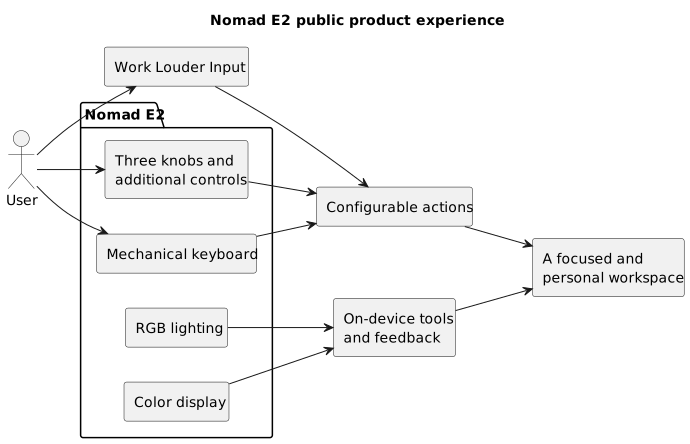
The public platform connects configurable controls and on-device tools within one workspace. The diagram does not represent the internal architecture.
My contribution
I contribute to the development of the embedded firmware and HMI.
My work includes:
- turning the capabilities of the new platform into usable features;
- developing the behavior of its controls and interface;
- keeping configuration, feedback, and everyday use coherent;
- building a firmware foundation that can grow with the product;
- integrating and validating the different parts on the physical device;
- collaborating with the team throughout product iterations.
The project requires working close to the hardware without losing sight of the final experience. Every feature needs to find an understandable place within the product and work with everything around it.
On a new platform, firmware does not inherit only a list of features to implement. It helps establish a language: how a function is entered, how the user returns, how a choice is confirmed, and which response connects a physical control to the display.
Giving structure to the possibilities
Three rotary controls, additional keys, a display, and lighting create many combinations. That amount of control is useful only if the person can build a stable mental model of the device.
My work therefore considers several questions before implementation:
- which control is most natural for the action;
- which information is needed before deciding;
- which feedback confirms the outcome;
- how the same gesture remains coherent across contexts;
- when a function should remain available without occupying attention.
This process turns separate hardware capabilities into an experience with recognizable rules.
Firmware and HMI as one product
On Nomad E2, I develop firmware and interface as parts of the same journey. Physical controls need a clear response, while the display should explain what is happening without becoming a distraction.
This approach helps keep the available functions coherent and creates an experience that remains recognizable as the product continues to evolve.
The HMI is therefore not treated as a later phase. It influences how a feature is organized, while the possibilities and constraints of the firmware influence how that feature can be presented. Working on both together reduces late compromises and creates more natural behavior.
Building strong foundations
A new generation offers more freedom than maintaining an existing product, but it also makes early decisions more important. A shortcut that works during a prototype can become a limitation as features, screens, and configurations grow.
I shaped my contribution around a foundation that is:
- understandable to develop and verify;
- coherent across the different areas of the product;
- prepared for further iterations;
- clear in the relationship between action and feedback;
- flexible enough to support personal configurations.
These goals do not describe a particular internal component. They describe the quality I work to preserve as the product takes shape.
Designing for the physical device
The display, controls, and lighting change meaning when they are used together on a desk. A screen can appear clear in isolation but become less effective while the person is also typing or turning a knob.
Validation on the physical device makes rhythm, readability, distance, and continuity visible. This is where firmware and product UX meet: a feature is complete not only when it responds, but when it occupies the right place in the experience.
A product still evolving
Nomad E2 is publicly presented as a pre-order product. My contribution therefore supports a product that continues to be refined before delivery, keeping technical needs, interaction, and perceived quality close together.
That context requires pragmatism. Decisions need to be solid enough to support the product, but also clear enough to be discussed, verified, and improved with the team.
Outcome
My contribution supports the transformation of the new platform into a complete product by connecting embedded behavior, interaction, and perceived quality.
Nomad E2 represents the kind of project where I can follow a new generation from its foundations and contribute both to its technical solidity and to how people experience it.
It is also the project that most directly demonstrates my cross-disciplinary profile: development close to the hardware, HMI design, and constant attention to the behavior of the complete product.
What this project says about my work
Nomad E2 highlights:
- firmware development for a new product generation;
- definition of a coherent language between controls and display;
- joint design of embedded behavior and HMI;
- validation on the physical device;
- the ability to build foundations designed to evolve.